Ref: XXX - Very Rare WW2 German Junkers 88 Collection!
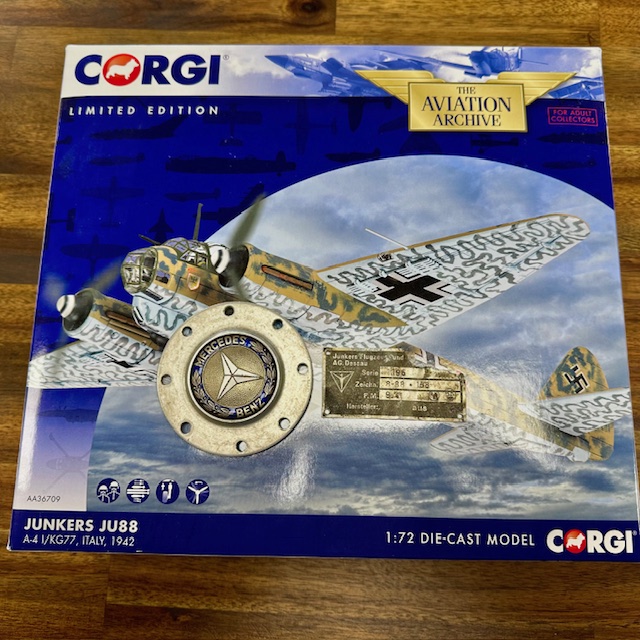
Product Info
Available: 1
Such a rare find!
Further information relevant to this Item
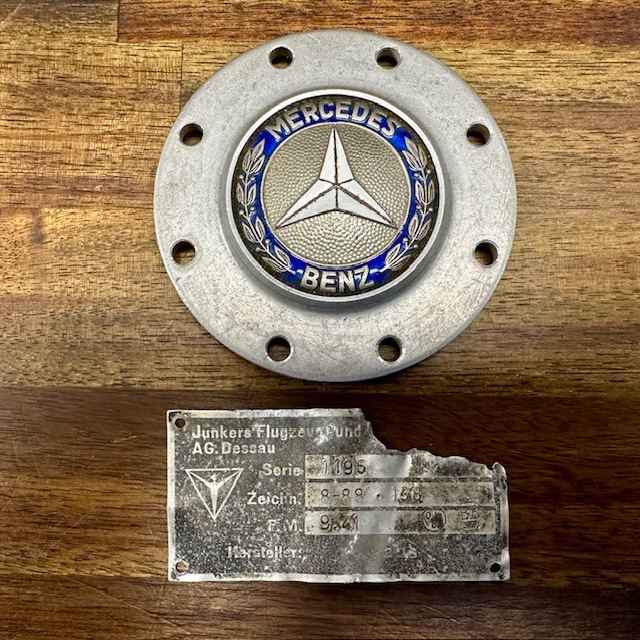
The connection between the Junkers Ju 88 and the Mercedes-Benz (Daimler-Benz) inverted V12 engine series represents a fascinating chapter in early World War II aviation prototyping, before supply priorities shifted the bomber over to Junkers' own powerplants.
The Prototype Connection When the Junkers Ju 88 was first designed as a high-speed Schnellbomber in 1936, the earliest variants relied on Mercedes-Benz power:- The First Flights: The initial two prototypes—the Ju 88 V1 (first flight on December 21, 1936) and the Ju 88 V2—were both powered by twin Daimler-Benz DB 600 liquid-cooled inverted V12 engines.
- The "Three Fingers" Nickname: These early Mercedes-powered prototypes featured elongated engine cowlings paired with circular radiators, earning the aircraft the early German nickname Dreifinger ("Three Fingers").
- Fighter Priority: As Germany ramped up military production, the highly advanced Daimler-Benz DB 600 series (and its direct-injection successor, the DB 601) was deemed scarce and strictly reserved for frontline fighters like the Messerschmitt Bf 109 and Bf 110.
- The Move to Jumo: Beginning with the Ju 88 V3 prototype in 1937, Junkers switched the aircraft to its own Junkers Jumo 211 inverted V12 engine. The Jumo 211 became the standard mass-production powerhouse for the vast majority of wartime Ju 88 bomber variants.
- Pilot Visibility: Dropping the bulk of the cylinder blocks lower allowed for a slimmer, tapered nose profile, vastly increasing the pilot's forward and downward field of view.
- Armament Integration: For fighters, it left an open valley along the centerline to mount a nose cannon that could fire directly through a hollow propeller hub.
- Maintenance: Mechanics could easily access the spark plugs and cylinder heads from the ground beneath the wing nacelles.
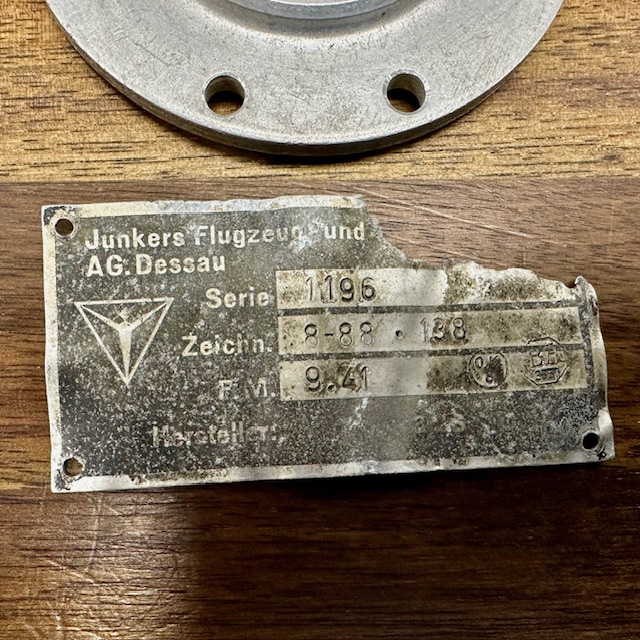
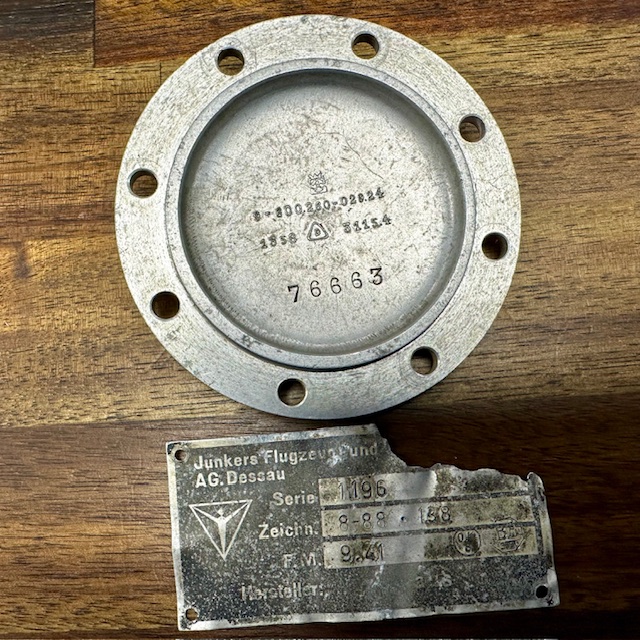
This is a component data plate (Typenschild) from a World War II German Junkers Ju 88 twin-engine multirole aircraft.
It was located on the wing structure or one of its control surfaces (such as the ailerons, flaps, or internal wing mechanisms). The layout code stamped onto the plate tells us the specific location on the aircraft:- Zeichn. (Zeichnung / Drawing Number) 8-88: The prefix 8 was the official Reichsluftfahrtministerium (RLM) code for military aircraft components, and 88 designates the Junkers Ju 88.
- The 138 Section Code: In the standardized Luftwaffe manufacturing block system, three-digit sequence variations following the base designation indicated distinct structural sub-assemblies. Codes in the 100-block relate specifically to sections of the main fuselage, wing root junctions, or interior wing framing panels.
- Zeichn. (Zeichnung / Drawing Number) 8-88: The prefix 8 was the official Reichsluftfahrtministerium (RLM) code for military aircraft components, and 88 designates the Junkers Ju 88.
- The 138 Section Code: In the standardized Luftwaffe manufacturing block system, three-digit sequence variations following the base designation indicated distinct structural sub-assemblies. Codes in the 100-block relate specifically to sections of the main fuselage, wing root junctions, or interior wing framing panels.
- Manufacturer: Junkers Flugzeug und AG Dessau (The primary aircraft plant in Dessau, Germany).
- F.M. (Fertigungsmeldung / Production Date): 9.41 indicates this specific component was completed and passed factory inspection in September 1941.
- The Manufacturer ("Junkers Flugzeug- und Motorenwerke AG, Dessau"): This plate confirms production directly at Junkers' primary facility in Dessau, Germany.
- The Aircraft Model (Zeichn. 8-88 - 158): The "8-88" prefix is the official Reichsluftfahrtministerium (RLM) aircraft type code assigned exclusively to the Junkers Ju 88 twin-engine multirole combat aircraft (bomber/night fighter). The 158 specifies the exact structural drawing or sub-assembly part of the airframe.
- The Production Date (F.M. 9.41): Fertigungsmonat translates to Manufacturing Month. This component was stamped and passed inspection in September 1941.
- The Plant Code (Hersteller: aus): The three-letter code aus was the secretive wartime ordnance code assigned to the Junkers sub-assembly facilities, ensuring part tracking while masking the location from Allied intelligence.